Planting Landscaping Boxwood Hedges

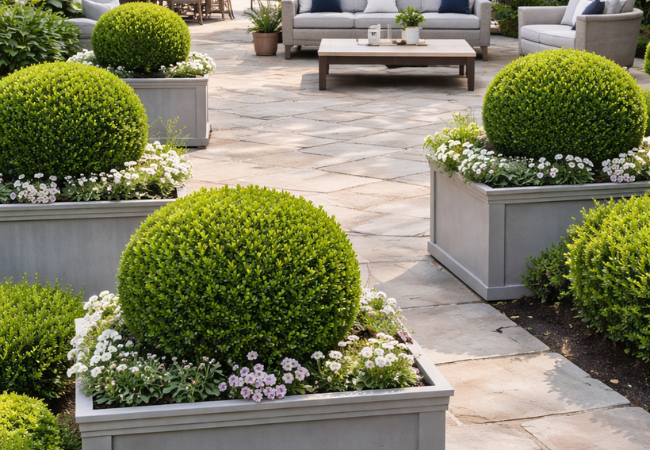
I love landscaping yards with boxwood hedges, which can change the whole appearance of any space. Boxwood is a great choice for people who want a tree that can be shaped easily. The varieties used in landscaping are often the dwarf varieties.
Light
Boxwood does well when planted in locations with partial shade. However, varieties can tolerate full sun. If you live in an area where the mid-day sun can get scorching, you should look for an area with shade.
Too much exposure to direct sun will burn the leaves. The hedges and the trees will have a bronzing look.
Watering
Boxwoods do well when watered thoroughly and deeply. If your watering is shallow, sufficient water will not reach the root one especially for already established Boxwood with well-developed root systems.
For the first two years before the Boxwoods are properly established, water them at least once every week. In general, you should also increase the frequency of watering during hot summers.
Soil
Boxwoods are not picky when it comes to the type of soil. As long as the soil is well-draining, they will grow well.
Avoid soils that are soggy as they can lead to root rot and eventually plant death. The ideal soil pH for Boxwood is between 6.5-7.
Boxwood Blight
Boxwood blight is one of the primary problems when growing Boxwood. The disease thrives under warm and damp conditions. To reduce the chances of your plants being attacked, avoid other subjects from overcrowding the Boxwood.
In autumn watch out for leaves that fall on to the trees and stick on their leaves. When left uncontrolled, the leaves trap moisture that can encourage disease.
Frequently check your tree so that you can note any signs of infection. Symptoms of Boxwood blight show up as brown or black patches on the leaves. If left unattended they eventually turn into black specks.
To control the disease, spray with a garden fungicide the instance you notice the brown and black patches.
Repeat the spraying procedure every 14 days. Recovering plants should also be fed and watered properly to help them recover fast.
Boxwood Winter Bronzing
Boxwood can sometimes develop a bronze or orange discoloration on the foliage. The intensity often increases during winter.
This can be disheartening for people who planted the trees for their evergreen look. The discoloration can also occur at any time for Boxwood trees that are grown in pots.
The discoloration is not Boxwood blight. It’s caused by nutrient deficiency, primarily potassium. Potassium is highly soluble and washes out of the soil during watering.
To address the problem, replenish potassium through fertilization and you will get healthy and beautiful looking trees.
Sometimes the bronzing can occur if the plant is located in the path of harsh winter winds. When selecting the planting location, make sure the plants will be sheltered from any harsh gusts of weed.
Boxwood Fertilizing
To get healthy foliage and stimulate growth to feed your Boxwood with fertilizer during spring. You can also feed the Boxwood in autumn if you notice the foliage is getting discolored.
Get a couple of small handfuls of the fertilizer and sprinkle it around the base of the Boxwood. Work it into the surface of the soil or growing medium if the plant is growing in a pot. Water it thoroughly immediately.
If getting the healthy dark green foliage is elusive even after fertilizing your boxwood, you can give it an extra boost by applying a can full of liquid tomato fertilizer.
The liquid tomato fertilizer is high in potash and should replenish the depleted nutrients and get your plant all healthy looking.
Mulching
Mulching Boxwood helps protect the shallow-rooted trees. The mulch helps keep the roots cool as well as preserve moisture around the roots.
Apply about 2-3 inches of mulch all around the tree. Avoid covering the trunk when applying your layer of mulch.
Boxwood Pests
Boxwood trees can also be attacked by tree leaf miners. These leaf miners can cause significant damage to boxwood plants, particularly in urban areas.
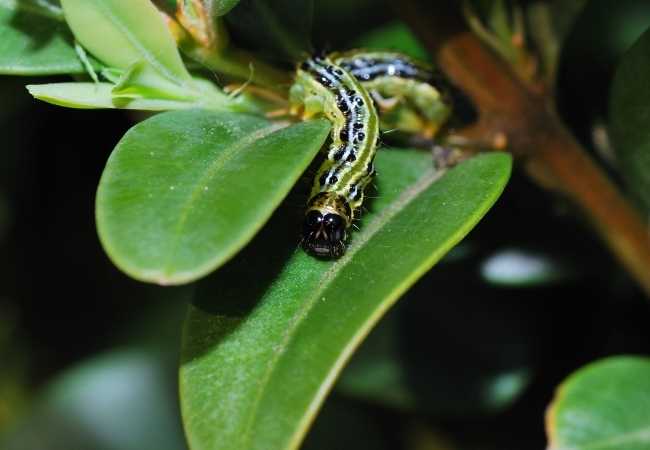
Take action as soon as you notice any leaves that have been eaten. Spray the entire tree with pesticides.
Make sure that both the underside and the upper side of the leaves are completely covered. Repeat the spraying process after 10 days.
Pruning and Trimming Boxwood
Boxwoods are popular trees for landscaping because they can be trimmed and shaped into different shapes and forms. Most people use them to make beautiful hedges while others make artistic shapes such as animals.
The best time to trim your boxwood is midsummer. If you trim them too early in the growing season, you risk early growth damage.
Early in the season, the plant is producing soft shoots that are susceptible to damage. Sometimes these soft shoots can get damaged by a late frost and tend to go white. This can sometimes be mistaken for Boxwood blight but it’s not.
Boxwood Container Gardening
Boxwoods can be successfully grown in containers. The trees are slow growers and can be established in lareg containers.
For best results for container Boxwood, choose the dwarf varieties. Also ensure that the containers are as large as possible. At least twice the size of teh root ball when establishing the plant the first time.
Caring for Boxwood in container is no different from caring for them in the garden. make sure to provide the plant with sufficient water and nutrients in the growing medium.
Growing boxwood in containers can be handy when you want to move the plant to a different location for different reasons.
10 Mistakes To Avoid When Landscaping With Boxwood
- Planting in poorly drained soil – Leads to root rot and unhealthy plants; always improve drainage before planting.
- Choosing the wrong variety – Different boxwoods have different sizes and tolerances; pick the right one for your climate and design.
- Overcrowding plants – Reduces airflow, encourages disease, and causes uneven growth; space based on mature size.
- Ignoring sunlight needs – Too much shade or harsh sun stresses plants; aim for balanced light conditions.
- Overwatering – Causes root problems and yellowing leaves; water deeply but allow soil to dry slightly between watering.
- Neglecting proper pruning timing – Late or poorly timed pruning can damage growth; prune in late spring or early summer.
- Cutting too aggressively into old wood – Can leave bare patches since boxwoods don’t regrow easily from old stems.
- Skipping mulch – Leads to moisture loss and weed competition; apply 2–3 inches of mulch around plants.
- Ignoring pests and diseases – Issues like blight and leaf miners spread quickly if unchecked; inspect regularly.
- Poor landscape planning – Random placement can look messy; use boxwoods strategically for structure and symmetry.
Related Posts
My Final Thoughts
Boxwoods can be utilized differently for different purposes. You can grow them as focal points, creating formal hedges, as well as creating elegant landscapes.
I love them because they are super easy to care for and low maintenance. As long as you give them basic care, you will have beautiful shrubs.
If you appreciate this post on Planting landscaping Boxwood hedges, please share it. Also, follow me on Pinterest for more awesome posts on gardening.