Square Foot Gardening Guide


Square foot gardening (SFG) is more than just a trend. It’s a time-tested, space-efficient gardening method. I love it because it is designed to help gardeners of all experience levels grow more food in less space, with less work.
Square Foot Gardening
Whether you’re working with a small backyard, a patio, or even a balcony, square foot gardening enables you to cultivate a thriving, productive garden in as little as 16 square feet.
Developed by Mel Bartholomew in the early 1980s, this method prioritizes simplicity, efficiency, and sustainability.
The idea is simple: divide a raised bed into a grid of 1-foot squares, and plant each square based on the spacing needs of the crop.
This method eliminates traditional row spacing, reduces weeds, conserves water, and maximizes harvest.
In this comprehensive guide, I’ll walk you through the entire process, from planning and building your raised bed to soil creation, planting, maintenance, harvesting, and adapting the system for various needs.
What is Square Foot Gardening?
Square foot gardening is a method of intensive planting that optimizes space and soil by eliminating rows and planting crops closely together in raised beds divided into 1-foot squares.
Core Principles Of Square Foot Gardening
Raised Beds: Provide better drainage, reduce soil compaction, and improve accessibility.
Grid Layout: Divides the bed into individual square feet for organized planting.
Companion Planting & Spacing: Based on the plant’s mature size and compatibility with neighbors.
Succession Planting: Allows replanting of harvested squares for continuous yields.
Square-foot gardening works because it eliminates wasted space from walkways and rows. It also reduces weeding, watering, and maintenance.
It improves yields per square foot and is ideal for beginners, kids, seniors, and those with mobility challenges.
Planning Your Square Foot Garden
Before you start building, it’s essential to plan thoughtfully. This ensures your garden is both productive and sustainable.
Choose the Right Location:
Sunlight: 6–8 hours of direct sunlight per day is essential for most vegetables.
Water Source: Should be within easy reach to avoid dragging hoses or heavy watering cans.
Shelter: Choose a site protected from strong winds but with good air circulation.
Soil Contact (optional): Raised beds don’t require good native soil, but consider drainage if placed directly on clay or compacted ground.
Decide on Bed Size:
- Standard Bed: 4 ft x 4 ft (16 squares) is the most common.
- Larger Bed: 4 ft x 8 ft (32 squares) for those wanting more growing space.
- Smaller Spaces: 2 ft x 4 ft or vertical containers for patios or balconies.
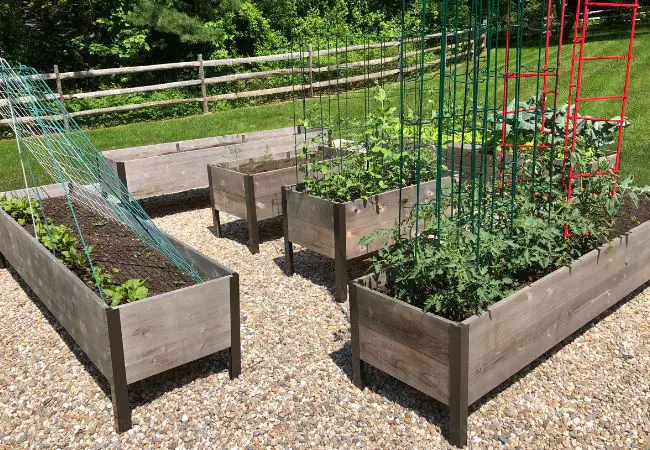
- Raised Heights: Beds can be elevated to tabletop height for accessibility.
Tip: Avoid making beds wider than 4 feet; you should be able to reach the center from any side without stepping into the bed.
Building the Raised Bed
A sturdy frame creates the foundation for your garden.
Materials:
Lumber: Untreated cedar, redwood, or pine (avoid pressure-treated wood near edibles)
Screws or nails: Galvanized or stainless steel to resist rust
Optional liners: Landscape fabric, wire mesh (if placed over grass or to deter pests)
Tools: Drill, screwdriver, saw, level, measuring tape
Step-by-Step Instructions:
- Measure & Cut Wood: For a 4×4 bed, cut four 4-ft boards.
- Assemble Frame: Lay the boards out on a flat surface and screw them together at the corners.
- Level the Ground: Clear and level the site before placing the bed.
- Place and Anchor: Place the frame and ensure it’s level. Optional: anchor it to prevent shifting.
- Add Bottom Liner: Use cardboard, weed cloth, or hardware cloth to suppress weeds and deter burrowers.
Depth: A minimum of 6 inches is required for most shallow-rooted crops. 12 inches allows deeper root crops like carrots, leeks, and potatoes. Deeper beds may require more structural reinforcement.
The Ideal Soil – Mel’s Mix
The soil is the heart of your garden. Square foot gardening uses a very specific blend called Mel’s Mix:
Soil Mix Recipe:
- 1/3 compost: Homemade or store-bought; combine sources (manure, food scraps, leaves).
- 1/3 peat moss or coco coir: Retains moisture and lightens the mix.
- 1/3 coarse vermiculite: Enhances drainage and aeration.
Compost Tips:
- Use at least 5 different types for a balanced nutrient profile.
- Avoid composts with fillers or synthetic additives.
- If making your own, allow it to break down completely before use.
Mixing Instructions:
Combine all ingredients on a tarp or in a wheelbarrow. Pre-moisten peat moss or coco coir—it’s hydrophobic when dry.
Fill the bed with the mix, lightly tamping it down but not compacting it. This soil retains moisture, supports microbes, drains well, and rarely needs fertilizer if compost is replenished annually.
Installing the Square Foot Grid
The grid is not optional; this is because it’s the defining feature of square foot gardening.
Its purpose is to ensure proper spacing, keep planting organized, and make crop rotation and succession planting easy.
Materials that can be used include wood laths, thin PVC pipe, string, wire, or even painted lines. Screws, nails, or clips to secure the grid
To install the grid, mark every 12 inches on all four sides of the bed. Stretch grid lines across the top, securing each end. Ensure each square measures exactly 12″ x 12″.
Planting Your Garden
Each square is treated as an individual micro-garden, with crops spaced according to mature size.
| Plants per Square | Examples |
| 1 per square | Tomato, pepper, broccoli, cabbage |
| 4 per square | Lettuce, Swiss chard, marigolds |
| 9 per square | Spinach, bush beans, beets |
| 16 per square | Carrots, radishes, green onions |
Root crops go deeper, leafy crops stay shallow, and vine crops can be trained upward to save space.
Succession Planting:
After one crop is harvested, replant the square with a new crop.
- Spring: radishes → bush beans → spinach
- Fall: peas → lettuce → garlic
Companion Planting:
- Tomato + Basil: Enhances flavor and repels pests.
- Carrots + Onions: Each deters the other’s pests.
- Avoid: Onions and beans (inhibit growth).
Maintenance and Care
Square foot gardening requires minimal upkeep when done right.
Watering
Water at the base to prevent fungal diseases. Early morning is best to reduce evaporation. Use drip irrigation, watering cans, or soaker hoses.
Weeding
Rare due to dense planting and rich soil. Pull weeds while small to prevent seed spread.
Pest Control
Use floating row covers for cabbage moths and aphids. Introduce beneficial insects like ladybugs and praying mantises. Interplant herbs like dill and mint to repel insects naturally.
Crop Rotation
Move crop families around each season to reduce disease risk and nutrient depletion.
Harvesting and Replanting
Proper harvesting leads to better regrowth and tastier crops.
Harvesting Tips
- Use clean scissors or snips to avoid damaging roots.
- Harvest outer leaves of lettuce and spinach first.
- Harvest root crops when mature to avoid woodiness.
Replanting
- Add a trowel of compost to each square before replanting.
- Track what was grown where to rotate appropriately.
Pro Tips for SFG Success
- Label squares with plant names and sowing dates.
- Keep a seasonal gardening journal.
- Focus on crops you and your family enjoy eating.
- Use trellises for vining crops: cucumbers, peas, pole beans.
- Shade cool-weather crops during the heat of summer with row covers or shade cloth.
Common Mistakes to Avoid
Overplanting: Stick to the proper plant count per square.
Poor Soil Mix: Skipping vermiculite or using low-quality compost leads to poor performance.
Too Much Water: Overwatering causes rot and disease.
Ignoring Sun Requirements: Most vegetables need full sun.
Neglecting Maintenance: Even low-maintenance beds need occasional care.
Adapting SFG for Different Lifestyles
For urban gardeners, use balcony planters or fabric grow bags with a grid drawn on top. Try vertical trellises, ladder gardens, or wall-mounted pocket planters.
For gardeners with mobility issues, build elevated beds on legs. Keep tools within reach and paths clear. You can also add a bench nearby for resting and observation.
For year-round gardeners, use cold frames or cloches for winter growing. Grow herbs and microgreens indoors under grow lights.
Final Thoughts
I love square foot gardening because it empowers anyone to grow a productive and manageable garden with minimal space and time.
With practice, anyone can enjoy a steady harvest of fresh vegetables, herbs, and flowers from spring to fall, and even into winter with the right setup.
SFG is ideal for busy people, beginning gardeners, and those with small spaces. Start with one bed, learn as you go, and expand with confidence.
If you love gardening, subscribe to my newsletter to receive the latest posts. Also, follow me on Pinterest 2mutligardening for more awesome posts.